

New Arrival / Sustain Pedal Deep Dive
Gamechanger Audio has released the PLUS Pedal II, a second-generation piano-style sustain and sostenuto pedal for guitar, bass, synth, voice, winds, strings and other sound sources—without the workflow of a conventional looper. Its new Spectral Sampling™ engine captures the harmonic character of each sound, while Auto Layer Catch and a gradual optical brass pedal make the layers feel like part of the performance.
The original PLUS Pedal was already one of the most unusual sustain effects ever put on a pedalboard. The second generation is a genuine redesign: a new engine, far more control over layering, direct microphone input, smarter effects routing and an optional footswitch built for stage work. At the time of writing, the PLUS Pedal II is available to order from Gsus4.

Quick Verdict
The PLUS Pedal II is for musicians who want sustained notes to become an instrument of their own—not simply a frozen chord underneath the next part.
Its strongest use cases are ambient and cinematic guitar, live sound design, solo performance, synth and keys, distorted textures, and acoustic or wind instruments captured with a dynamic microphone. If you only need an occasional single-note freeze, a simpler pedal may be enough. If you want to shape, stack and perform the sustain in real time, this is the more ambitious tool.
What Is the Gamechanger Audio PLUS Pedal II?
The Gamechanger Audio PLUS Pedal II is a real-time sustain and layering pedal. It analyses incoming audio, captures its spectral character and extends it into playable layers. You can hold one clean layer, stack up to ten, or move into Infinite mode so older layers keep folding into the evolving sound.
That distinction matters. A looper records a phrase and repeats it. The PLUS Pedal II is designed to preserve and extend notes, chords and timbres so they can bloom beneath the live performance. It can act like a piano damper, a controllable drone generator, an ambient bed, a harmonic resonator or a sound-design instrument.
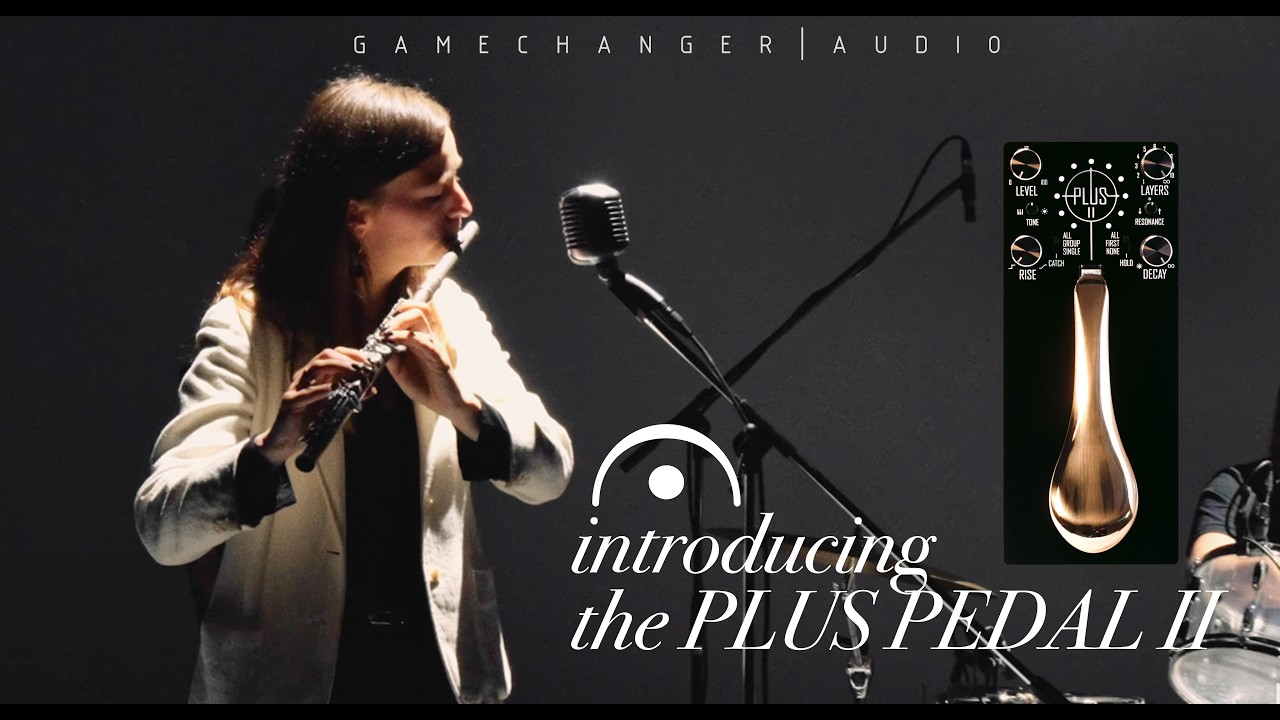 Watch: PLUS Pedal II official introductionOpens the Gamechanger Audio video on YouTube.
What’s New in the PLUS Pedal II?
This is not a cosmetic update to the original PLUS Pedal. Gamechanger Audio has rebuilt the capture engine, expanded the controls and redesigned the hardware around faster, more expressive live layering.
| New / Improved Area | What PLUS Pedal II Adds | Why It Matters |
|---|---|---|
| Spectral Sampling™ engine | A redesigned capture and layering algorithm that analyses timbre, dynamics and harmonics. | Sustained layers retain more of the identity and movement of the original instrument. |
| Auto Layer Catch | Keep the brass pedal engaged while new note events are detected and layered automatically. | You can concentrate on playing instead of manually catching every sound. |
| Layer control | Choose 1–10 active layers or Infinite mode. | Move from a clean held chord to a dense, continuously evolving soundscape. |
| Gradual optical pedal | The brass pedal reads movement across its range instead of acting as a simple on/off switch. | Sustain level and release can respond more like a piano damper or a volume swell. |
| Rise, decay, tone and resonance | Dedicated shaping controls plus upper/lower harmonic resonance behaviour. | Layers can enter softly, disappear quickly, stay clean or become more harmonically animated. |
| Combo XLR/TS input | Instrument input and a built-in analogue preamp for dynamic microphones. | Voice, flute, saxophone, brass, strings and acoustic instruments can connect directly through a suitable microphone. |
| Smart stereo FX loop | Switch external effects between Pre, Inside and Post positions without repatching. | The same delay, reverb, modulation or drive can affect the input, only the sustained layers, or the complete output mix. |
| Visual feedback | An 11-LED circular display shows active layer activity and engine state. | You can see the sustain structure building under your foot. |
| USB-C and new footswitch | USB-MIDI, firmware updates and optional Wet, Latch and Hide performance modes. | The pedal fits modern studio rigs and offers more hands-free control on stage. |
Gsus4 take: Auto Layer Catch is the workflow upgrade; the gradual brass pedal is the feel upgrade; and the movable effects loop is the sound-design upgrade. Together, they make the PLUS Pedal II feel less like a utility freeze effect and more like a playable instrument.
Who Is the PLUS Pedal II For?
Ambient, Worship and Post-Rock Guitarists
Build pads under chord changes, sustain a harmony while moving to a lead line, or turn drive and reverb into a controlled wall of sound.
Composers and Sound Designers
Capture single sounds, introduce resonance and let Infinite mode evolve into beds, transitions and generative textures.
Synth and Keyboard Players
Hold a spectral layer while changing patches, free both hands for the next part, or process only the sustained sound through the loop.
Solo and Duo Performers
Create harmonic support without launching a recorded backing track. The layers remain connected to the notes being played in the moment.
Wind, String and Vocal Performers
Use a dynamic microphone to sustain flute, saxophone, brass, bowed strings, voice and other acoustic sources directly.
Experimental Pedalboard Builders
Move an effect before, inside or after the sustain engine and hear three different relationships between the played note and its layer.
Who may not need it? If you want one compact switch that freezes a single chord occasionally, the PLUS Pedal II may offer more depth than you need. It earns its space when sustain, layering and live sound construction are central to the music.
Practical Application Examples
1. Build a Chord One Note at a Time
- Select a finite layer count—three or four is a useful starting point.
- Play the root, third and fifth as separate notes while Auto Layer Catch adds each one.
- Use a moderate Rise setting so the chord appears smoothly rather than jumping forward.
- Play a melody over the finished bed, then release or replace layers as the harmony changes.
2. Turn a Distorted Guitar into a Cinematic Pad
Place drive before the PLUS Pedal II so the sustain engine receives the complete distorted spectrum. Keep the layer count controlled at first, use a slower rise and add reverb inside the FX loop so the live dry guitar remains defined while the sustained layer spreads behind it.
3. Create a Hidden Layer on Stage
Connect the optional footswitch and select Hide mode. When the brass pedal is engaged, the dry input is gradually removed so the audience hears the resulting layer without hearing the note used to feed it. This is excellent for seamless transitions, surprise harmonies and atmospheric scene changes.
4. Sustain an Acoustic Instrument with a Microphone
Connect a dynamic microphone to the XLR input, set the analogue gain conservatively, switch Kill Dry on if the audience should hear the instrument acoustically, and send only the sustained layer to the PA. This keeps the natural acoustic source separate from the processed ambience.


Using the PLUS Pedal II with Different Instruments
The settings below are practical starting points, not fixed manufacturer presets. Adjust them for the dynamics, register and density of the source.
| Instrument / Source | Useful Starting Approach | Application |
|---|---|---|
| Electric guitar | Try 3–5 layers, a soft Rise and reverb inside the loop. | Ambient chord beds, lead-line sustain, worship swells and post-rock transitions. |
| Bass | Begin with 1–3 layers, shorter decay and restrained resonance. | Held upper-register harmonies, bowed-style drones and sparse cinematic foundations without excessive low-end build-up. |
| Synth or keys | Use finite layers for harmony or Infinite mode for evolving sound design. | Hold one patch beneath another, create drones or send only the sustained layer through modulation. |
| Voice | Use a dynamic microphone, moderate preamp gain and a gentle Rise. | Wordless choir beds, harmonised vowels and atmospheric transitions. |
| Flute, saxophone or brass | Mic the instrument, catch stable notes and keep decay matched to the phrasing. | Build chords that are physically impossible to play alone or sustain a harmony under a solo. |
| Strings and acoustic instruments | Use a pickup into the TS input or a dynamic microphone into XLR; Kill Dry is useful for acoustic performance. | Extend plucked notes, create bowed ensembles and separate natural stage sound from processed layers. |
PLUS Pedal II Signal Chain
For a conventional ambient guitar board, place gain before the PLUS Pedal II and time-based effects after it. This lets the sustain engine capture the complete guitar tone while delay and reverb place both the live and sustained signals in the same space.
Input: Guitar or instrument into the combo input using a standard 1/4-inch TS cable.
Starter settings: Auto Layer Catch on, Layers at 3–5, moderate Rise, a Decay long enough to overlap the next phrase, and Tone/Resonance adjusted to leave space for the live part.
Main path: PLUS Pedal II main output to delay/reverb, then into an amp, modeller, mixer or audio interface.
Alternate path: Connect the optional footswitch to the FSW/DRY OUT connection. Its dedicated Dry Out can feed a second amp, mixer channel or tuner while the sustained path continues separately.
Destination: Use mono for a simple board, or the stereo TRS connections with the appropriate breakout/Y cabling and two destination inputs.
Setup warning: The PLUS Pedal II requires a regulated 9V DC, centre-negative supply rated for at least 500mA. The XLR preamp is intended for dynamic microphones and does not provide phantom power. Start with low microphone gain and raise it gradually to avoid clipping or feedback.
How the Smart FX Loop Changes the Signal Chain
The three-position loop is one of the most creative parts of the redesign. Connect an external pedal to SEND and RETURN once, then choose where it sits relative to the sustain engine.
| FX Loop Position | What the External Effect Processes | Try This |
|---|---|---|
| Pre | The effect sits before the PLUS Pedal II engine, so its full texture is captured into each layer. | Delay before PLUS for rhythmic fragments that become part of the sustained bed. |
| Inside | The effect changes the sustained layers while leaving the live dry path more distinct. | Reverb, chorus, pitch or granular effects on the pad without washing out the played note. |
| Post | The effect sits after the engine and treats the complete main output mix. | A final stereo reverb or delay that places both dry playing and sustained layers in one space. |
What Does the PLUS Pedal II Footswitch Do?
The optional PLUS Pedal II Footswitch adds three performance modes and a separate Dry Out. It connects by TRS, and the required TRS cable is included.

| Mode | What It Does | Best Use |
|---|---|---|
| Wet | Removes the dry signal from the main output, leaving the sustained layers. | Pure drones, transitions and a separate wet/dry rig. |
| Latch | Keeps the PLUS Pedal II active without holding down the brass pedal. | Auto Layer Catch, long performances and hands-free continuous layering. |
| Hide | Gradually removes the dry signal while the brass pedal is engaged. | Feed notes into a layer without revealing the source notes to the audience. |
Compatibility matters: PLUS Footswitch II works only with PLUS Pedal II. The original PLUS Footswitch is not compatible with PLUS Pedal II, and PLUS Footswitch II is not compatible with the original PLUS Pedal.
Key Specifications
| Specification | PLUS Pedal II |
|---|---|
| Audio engine | Spectral Sampling™, 44.1kHz / 24-bit digital audio |
| Layering | 1–10 layers or Infinite mode |
| Controls | Level, Layers, Rise, Decay, Tone, Resonance; Catch and Hold switches; gradual brass pedal |
| Instrument input | 1/4-inch unbalanced TS via combo input; 1MΩ input impedance |
| Microphone input | Balanced XLR via combo input; up to +27dB analogue gain; dynamic microphones only; no phantom power |
| Send / return / output | Stereo 1/4-inch TRS connections; Pre, Inside and Post FX-loop routing |
| USB-C | USB-MIDI and firmware updates |
| Power | 9V DC, centre-negative, 500mA minimum; power supply sold separately |
| Dimensions | 90 × 195 × 72mm |
| Weight | 995g |
| Manufacture | Designed and manufactured in Latvia |
PLUS Pedal II with Bass, Flute and Saxophone
These official demonstrations are useful because the PLUS Pedal II makes more sense when heard on sources beyond electric guitar. Each card opens on YouTube.
 PLUS Pedal II with ContrabassHear layered low strings and bowed textures.
 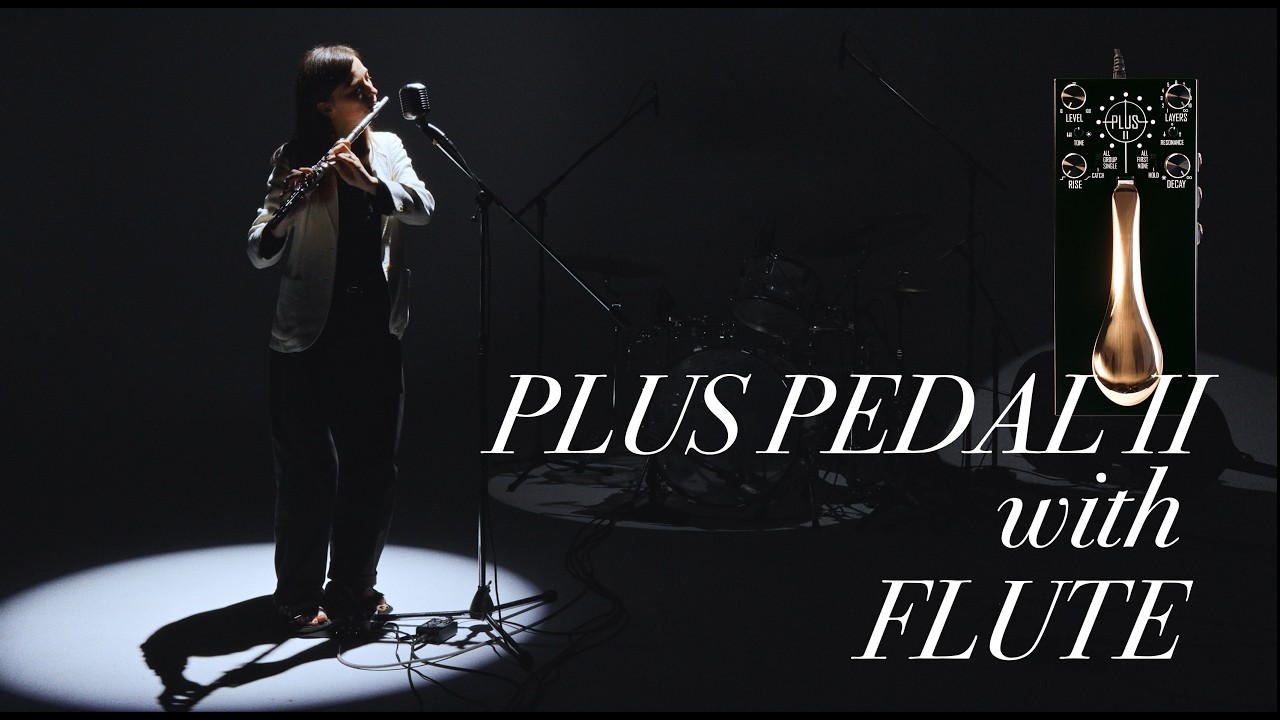 PLUS Pedal II with FluteHear breath, harmony and sustained wind layers.
 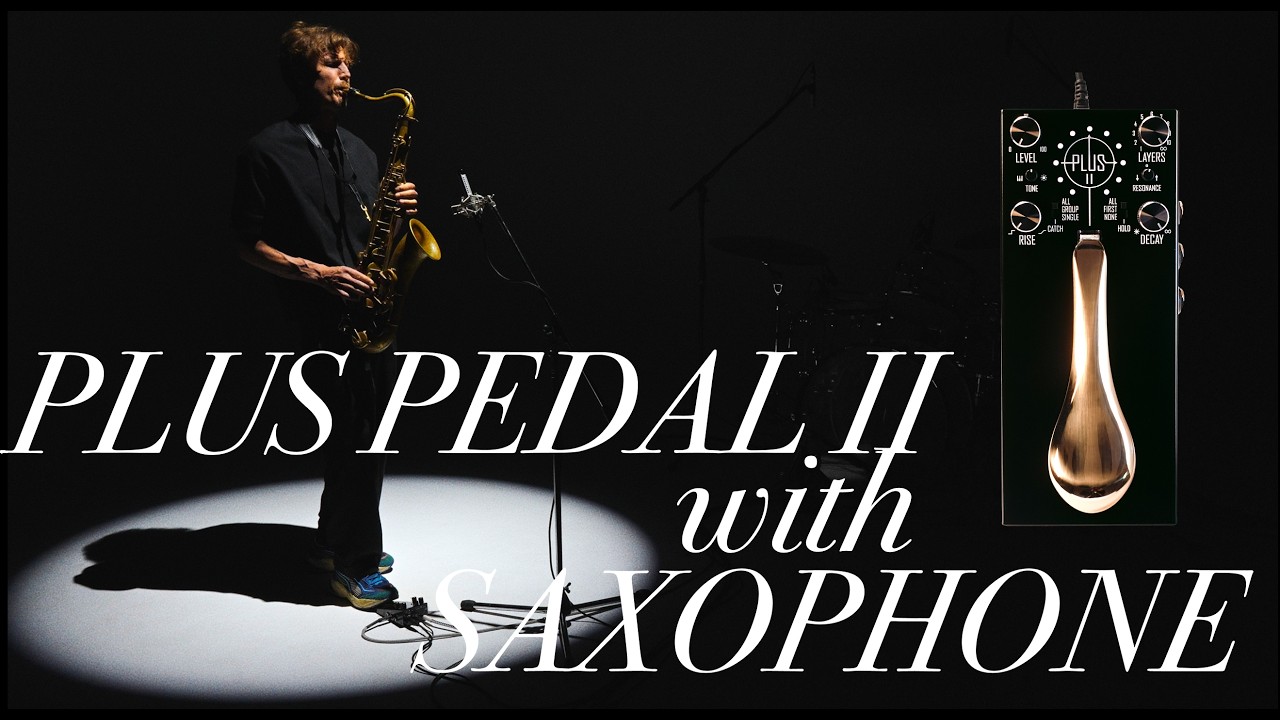 PLUS Pedal II with SaxophoneHear a solo instrument build its own support.
What Other Pedals Does Gamechanger Audio Offer?
Gamechanger Audio’s range is built around physical processes and unusual control ideas. If the PLUS Pedal II appeals because it changes how an effect behaves under the player, these are the other key models to explore at Gsus4.
Final Verdict: Is the PLUS Pedal II Worth It?
Yes—if sustain is part of how you compose and perform, rather than an effect you switch on once in a set.
The original PLUS Pedal proved that sustain could be more organic than a freeze button and more immediate than a looper. PLUS Pedal II pushes the concept into a much broader instrument: automatic capture, controlled layer counts, Infinite mode, spectral resonance, direct microphone input, expressive pedal travel and three-position effects routing.
For guitarists, it can turn a pedalboard into an ambient ensemble. For synth, voice, wind and string players, it offers a practical way to build harmony around a single live source. For composers and sound designers, it is a hands-on route into evolving texture without stopping to edit a loop.
Gamechanger Audio PLUS Pedal II FAQ
Is the PLUS Pedal II a looper?
No. It captures and extends the spectral character of notes and chords as sustain layers. It does not work like a conventional phrase looper that records and repeats a timed performance.
Can the PLUS Pedal II sustain more than one note?
Yes. The Layers control selects from 1 to 10 active layers, and Infinite mode continuously folds older layers into new ones for evolving textures.
Can I use the PLUS Pedal II with vocals or acoustic instruments?
Yes. The combo input accepts a dynamic microphone through XLR and includes up to +27dB of analogue gain. It does not supply phantom power.
Does the PLUS Pedal II work with bass and synth?
Yes. It is designed for melodic instruments and experimental sound sources, including bass and synth. With bass, begin with fewer layers and restrained resonance so the low end stays clear.
Where should the PLUS Pedal II go in a signal chain?
A useful starting point is after compression and drive but before the final delay and reverb. Its switchable FX loop can also place one external effect before, inside or after the sustain engine.
Do I need the PLUS Pedal II Footswitch?
No. The main pedal works on its own. The footswitch is worthwhile if you want instant Wet, Latch and Hide modes, continuous hands-free layering or a separate Dry Out.
Will the original PLUS Footswitch work with PLUS Pedal II?
No. The two footswitch generations are not cross-compatible. Use PLUS Footswitch II only with PLUS Pedal II.
What power supply does the PLUS Pedal II need?
Use a regulated 9V DC, centre-negative pedal power supply rated for at least 500mA. The power supply is sold separately.
Leave a comment