

GSUS4 Guides / Reverb & Delay
The Sound of Springs
Before ambience became a preset, spring reverb was a physical event: a guitar signal thrown into steel, shaken by transducers, recovered by a circuit and returned as splash, drip and electricity.
Spring reverb is one of the few effects that still feels mechanical even when it is carefully controlled. It can be subtle, but it is never completely polite. It has attack, movement, crash and a kind of beautiful imperfection that shaped surf music, Fender amplifiers and a huge part of electric-guitar history.

Quick Verdict
- Choose real spring if the feel of the tank matters: the crash, the uneven bloom, the way the note hits the spring before it becomes ambience.
- Choose digital spring if you need stereo, presets, compact size, low noise and repeatability on stage.
- Choose SurfyBear if surf authenticity is the priority. The SurfyBear family is still one of the strongest modern answers to the outboard spring-reverb tradition.
- Watch the new White Whale Junior if you want real spring reverb plus analogue tremolo in a more pedalboard-friendly footprint.
Origins
From Hammond organs to Fender amps
The spring reverb story begins before surf music and before the black-panel Fender amp. Laurens Hammond’s organ world needed a compact way to create artificial space in homes and small rooms. The answer was electromechanical: send the signal into a spring assembly, let the metal move, then recover the delayed vibration as sound.1
Fender turned that idea into one of the defining electric-guitar sounds. The 6G15 outboard reverb unit arrived in 1961 and was used almost like a separate effect: guitar into the reverb unit, reverb unit into the amplifier. Its control language — Dwell, Mixer and Tone — still defines serious spring units today. Dwell drives the springs. Mixer balances wet and dry. Tone shapes the recovered reverb signal.2
By 1963, Fender had begun building reverb into production amplifiers, with the Vibroverb becoming a landmark model for built-in reverb and vibrato effects.3 From there, reverb spread through the Fender line and became inseparable from names like Deluxe Reverb, Super Reverb and Twin Reverb. The built-in amp reverb was practical; the outboard tank remained more theatrical, more immediate and, for many surf players, more alive.
Featured real spring unit
Surfy Industries SurfyBear Classic V3
The SurfyBear Classic V3 is the modern reference point for players chasing outboard-style spring reverb. It uses a real spring pan and a solid-state circuit inspired by the Fender 6G15 idea, but voiced for today’s rigs and reliability expectations.
View at GSUS4The modern choice
Digital spring versus real spring
The real question is not whether digital spring reverb is “good enough.” The best DSP spring pedals are now highly musical. The question is what kind of behaviour you want under your hands.
A pedal like the Source Audio True Spring shows how refined digital spring design has become, with Short, Long and Tank modes, tremolo options and deep editing through the Neuro platform. At the other end of the spectrum, an analogue unit like the Echo Fix EF-P2 or a real-spring SurfyBear puts the physical pan at the centre of the experience.

Digital benchmark
Source Audio True Spring
Compact stereo spring sounds with Short, Long and Tank modes, tremolo engines and deep editing. A strong option for players who need spring vocabulary in a modern rig.
View at GSUS4
Analogue spring voice
Echo Fix EF-P2
A fully analogue spring-reverb pedal from the Australian tape-echo world, voiced for players who want studio-grade spring texture without a large outboard format.
View at GSUS4Listening reference: Source Audio True Spring demonstrates how convincing a compact digital spring platform can be when the algorithm is designed specifically around spring behaviour.
Drip and surf
Why surf players talk about “drip”
“Drip” is the word guitarists use when spring reverb stops acting like background ambience and becomes part of the note attack. It is the sharp, liquid, percussive front edge that appears when the circuit drives the tank hard enough for the springs to answer back.
Surf guitar made that sound iconic. Dick Dale’s aggressive picking, loud amplifiers and wet reverb became a blueprint for the electric-guitar language of waves, speed and Southern California spectacle. Fender’s own writing on Dale notes that reverb became synonymous with surf music after he began using the reverb tank as part of his guitar sound.4
That is why surf reverb is not simply “a lot of reverb.” It is the relationship between a bright guitar, decisive picking, a driven spring circuit and the way the wet signal sits in front of the amplifier.

Affordable surf flavour
TC Electronic Drip Spring Reverb
The TC Electronic Drip is a practical spring-voiced stompbox with Dwell, Mix and Tone controls. It is an easy entry point for players who want the surf vocabulary without a large real-spring box.
View at GSUS4Listening reference: a SurfyBear Classic 3.0 / SurfyPan Extra demo helps show why players describe “drip” as a physical response rather than just an EQ curve.
The tank question
Does size matter? Short springs, long springs and the circuit around them
In real spring reverb, size matters — but not in the crude “bigger is always better” sense. A spring tank is a system: pan length, number of springs, decay rating, mounting orientation, impedance, driver circuit, recovery stage and enclosure all affect the final feel.
Common tank families include short 9.25-inch pans and long 16.25-inch pans, with two- or three-spring designs. Broadly, long tanks tend to give a deeper and smoother decay; short tanks often feel tighter, faster and more board-friendly. Three-spring formats can sound denser, while two-spring formats can sound more open and old-school.5
Often around 9.25 in.
Often around 16.25 in.

Compact real spring
SurfyBear Compact
The SurfyBear Compact is the bridge between big-tank culture and modern pedalboards: a real spring unit in a far more practical enclosure, with controls designed for players who still want the tank to do the work.
View at GSUS4New arrival focus
Crazy Tube Circuits White Whale Junior
The original White Whale concept was romantic: real spring reverb and vintage-amp tremolo in one pedal. The new White Whale Junior asks a more pointed question: how much of that identity can be retained in a standard-pedal footprint?
According to Crazy Tube Circuits, the White Whale Junior uses the same three-spring assembly family as its larger siblings and drives it with a dedicated analogue power amplifier. Its published enclosure dimensions are 15.4 × 8.3 × 6.8 cm, which is unusually compact for a pedal that combines real spring reverb and analogue tremolo.6
The control layout matters. On the reverb side, Dwell, Tone, Mix and Volume give the player outboard-style vocabulary rather than a single “reverb amount” knob. On the tremolo side, speed, intensity and volume keep the amp-effect theme intact. The reverb is placed before the tremolo, so the dry guitar and the spring decay pulse together.

Real spring + analogue tremolo
Crazy Tube Circuits White Whale Junior
A compact, tactile reverb-and-tremolo pedal for players who want a real spring inside the enclosure rather than a digital spring model. It is especially compelling for amp-style rigs, roots tones, surf-flavoured rhythm work and small boards that still need real mechanics.
View at GSUS4Listening reference: White Whale Junior is worth hearing because the whole point is the interaction between real spring reverb and amp-style tremolo.
Spring reverb specialists
Why SurfyBear remains a spring-reverb stronghold
Surfy Industries has built its reputation around one core idea: make the outboard spring-reverb experience practical for modern players without smoothing away the things that made it exciting in the first place. The SurfyBear range is not simply “reverb pedals.” It is a family of real-spring tools for players who want the tank to be part of the performance.
Outboard-style flagship
SurfyBear Classic V3
The natural first stop for surf and vintage-reverb purists who want the size, feel and authority of a standalone tank.
View at GSUS4
Road-ready tank
SurfyBear Metal V2
A tough metal-enclosure option for players who want full real-spring character in a more rugged, gig-minded package.
View at GSUS4
Compact tank
SurfyBear Compact
A pedalboard-friendly real-spring unit for players who want authentic tank behaviour without a full outboard box.
View at GSUS4
Reverb + tremolo
SurfyBear Compact Deluxe
A compact real-spring format with analogue tremolo added, aimed at players who want the classic amp-effects pairing in one unit.
View at GSUS4
Studio format
SurfyBear Studio
A rack/studio-minded SurfyBear for players, engineers and producers who want real spring as an outboard production tool.
View at GSUS4
Collector tone piece
SurfyBear Beach Boys Pet Sounds
A themed analogue spring-reverb model for players drawn to the studio-pop mythology and wet ambience of classic records.
View at GSUS4Other spring voices worth knowing
Recommended spring-reverb pedals at GSUS4
Not every player needs a full real-spring unit. Some need a small always-on ambience pedal, some need a studio-like reverb and tremolo box, and some want a simple amp-style splash that does one thing quickly. These are the supporting cast worth considering.

Budget mini pedal
Tone City Tiny Spring
A tiny, affordable way to add spring-style ambience to a compact pedalboard.
View at GSUS4
Compact amp-style reverb
Wampler Mini Faux Spring
A refined mini pedal for players who want simple, amp-like spring flavour with Wampler’s practical control feel.
View at GSUS4
One-knob simplicity
J Rockett Boing
A straight-to-the-point spring-style reverb pedal for players who want to set the amount and play.
View at GSUS4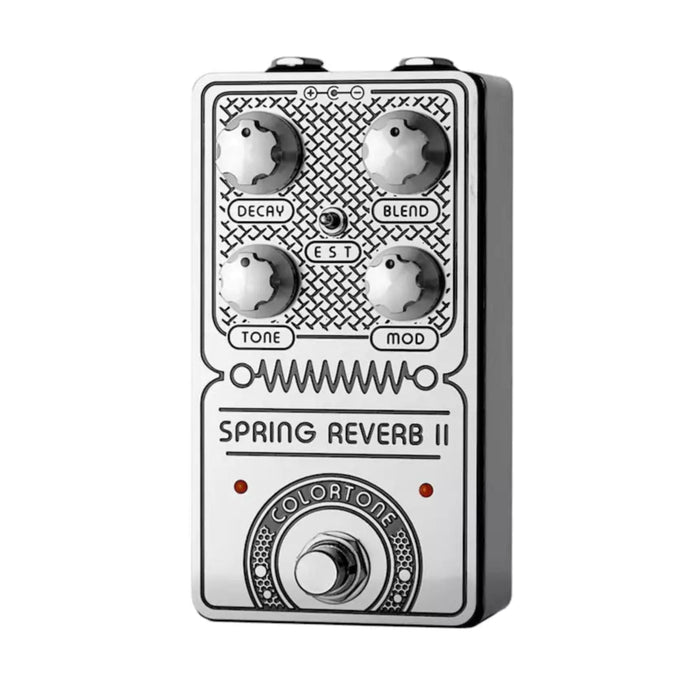
Vintage-voiced option
Colortone Spring Reverb II
A spring-voiced pedal for players who want vintage ambience without taking the board into large-tank territory.
View at GSUS4
Larger classic format
Crazy Tube Circuits White Whale V2
The fuller-format White Whale for players who want the established CTC real-spring-and-tremolo platform.
View at GSUS4
Amp-inspired pairing
Milkman Sound F-Stop
A reverb-and-tremolo pedal inspired by classic American amp effects, ideal when the goal is tasteful vintage movement.
View at GSUS4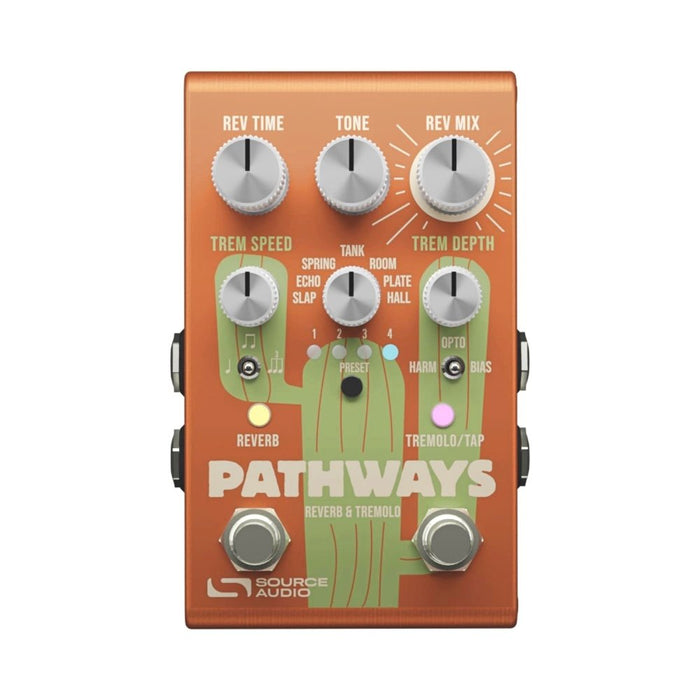
Modern stereo command centre
Source Audio Pathways
A stereo reverb-and-tremolo platform for modern rigs that still need classic Spring and Spring Tank vocabulary.
View at GSUS4Buying advice
How to choose the right spring reverb
There is no single winner because “spring reverb” covers several jobs. A surf player trying to hear the pick bounce into a spring pan will probably value a real tank. A modern stereo player may prefer a strong digital engine. A roots player may want reverb and tremolo together. The right choice is the one that matches the role the reverb plays in the rig.
FAQ
Spring reverb FAQ
Is real spring reverb always better than digital?
No. Real spring is more physical; digital is often more practical. Real tanks win when the mechanical feel is the point. Digital wins when compact size, stereo operation, presets and consistency matter more.
Does a longer tank always sound better?
No. A longer tank can sound deeper and smoother, but the driver circuit, recovery stage, spring count and enclosure matter just as much. A well-designed compact real-spring unit can outperform a poorly voiced large tank.
What is “drip” in spring reverb?
Drip is the percussive, liquid attack of a spring unit being driven hard enough to make the tank respond as part of the note. It is central to surf guitar, but useful anywhere the reverb needs to feel animated rather than merely spacious.
Which product is best for classic surf?
Start with SurfyBear Classic V3 if the brief is classic outboard-style surf reverb. For a more compact board, SurfyBear Compact and White Whale Junior are strong real-spring alternatives.
Which product is best for a modern stereo rig?
Source Audio True Spring and Source Audio Pathways are the more modern-control choices, especially when presets, stereo operation and deeper editing are important.
Leave a comment